Saturday, March 10, 2018

Medic who documented Nazi camp horror dies at 93

Edit Posted by with No comments

Not only is he a great American, but he's also an icon," Col. Dan Forden, a chaplain at the VA Hospital in Loma Linda, told the crowd. "He's the real measure of a man -- this is the man we want to be."
Three rifle volleys echoed across the hushed crowd. A bugler played "Taps" as veterans gave Acevedo one final salute. Each of Acevedo's children were presented with folded flags, including the one from his coffin, before a bagpiper played "Amazing Grace."
"If I can describe my father with one word, it would be heart," Acevedo's daughter, Rebeca Acevedo-Carlin, said at an earlier memorial service.
"What an incredible, genuine man he was," said his son, Fernando Acevedo. "He would always say have faith, care for others and, more importantly, love one another. I saw my father act with love toward everyone."
His story is one of bravery, honor and heroism -- one forever etched in American history.

Among the 'undesirables'

Anthony Claude Acevedo was born July 31, 1924, in San Bernardino, California, to parents who had entered the country illegally from Mexico. The young family moved to nearby Pasadena, where Acevedo attended segregated schools with blacks, Asians and other Latinos. When his parents were deported back to Mexico in 1937, he went with them.
But his love for America never wavered. After the Japanese bombed Pearl Harbor on December 7, 1941, Acevedo was determined to defend his homeland. At age 17, he crossed back into the United States and enlisted in the Army. He received medical training in Illinois and eventually landed in the European theater in October 1944, where he served as a medic.
"Was captured the 6th of January 1945," he wrote in his first journal entry after being taken prisoner at the Battle of the Bulge.
The next month, 350 US soldiers -- Jews and "undesirables," including Acevedo -- were separated from other prisoners of war. They were told they were going to a beautiful camp with live shows and a theater. Instead, they were put on cattle cars and transported to Berga, a slave labor subcamp of the notorious Buchenwald concentration camp in Germany where tens of thousands of Jews died.
The US soldiers worked 12-hour days in the final weeks of the war, digging tunnels for a sophisticated V-2 rocket factory. Soldiers were starved and brutalized with rubber hoses and bayonets. Some were fatally shot in the head with wooden bullets. The Nazis forced Acevedo to fill the holes in the heads of his fellow soldiers with wax to cover up the killings.
Acevedo used a fountain pen to record the atrocities in a diary, noting every US soldier's death that he saw. About half of the soldiers sent to Berga survived, according to the United States Holocaust Memorial Museum
During the next six decades, the US government never acknowledged its soldiers were held in a slave labor camp. But after Acevedo shared his account with CNN in 2008, the story went viral and the public demanded answers. Then-US Reps. Joe Baca of California and Spencer Bachus of Alabama pressed then-Army Secretary Pete Geren to recognize the soldiers.
Within months, Army Maj. Gen. Vincent Boles met with six Berga survivors at a POW event in Orlando, presenting them with flags flown over the Pentagon and honoring them for their sacrifice. One soldier received the Bronze Star, one of the nation's highest medals.
"It wasn't a prison camp. It was a slave labor camp," Boles told them. "You were good soldiers and you were there for your nation."
Acevedo boycotted the ceremony, saying he felt it should have been held in Washington.

A 'moral obligation'

In 2010, Acevedo became the first Mexican-American to register as a Holocaust survivor at the US Holocaust Memorial Museum, out of 225,000 registered there. Acevedo donated his diary, Red Cross medic's band, cross and prayer book to the museum.
The museum recorded his oral history in English and Spanish. After Acevedo came forward, other Berga survivors did the same, recording their testimonies and donating historical artifacts. Previously, the museum only had a handful of testimonies from Berga; now it could add their stories to its permanent collection.
"We were able to finally tell their story in our exhibition for the first time because we now had physical evidence that we could show our visitors," said Kyra Schuster, a museum curator.
View Acevedo's diary catalogued by the museum
Acevedo's story also allowed Mexican-Americans to connect to the Holocaust in a way they never had before. Schuster still travels the country telling the story of Berga, and she says it's always incredible when Latinos learn of Acevedo's survival and courage.
When asked why he put his own life at risk by keeping a diary of every US soldier's death he witnessed, Acevedo told the museum, "It was my moral obligation to do so."
"That's always stuck with me," Schuster says, "because I think that defines who he is.
"He was this man who, despite the odds against him, despite what he was going through and experiencing, it was still important for him to take care of others, to document what was happening, to make sure the world knew what had happened to them.
"That's why he spoke out later in life. He was always putting other people ahead of himself. That's how I see him, and that is so admirable."
Proud of his heritage, Acevedo listened with dismay over the last year as the nation's leaders took a hardened stance toward immigrants.
"They don't know shit from Shinola," Fernando Acevedo recalled his father saying.
His son said Acevedo, a lifelong conservative, would shake his head and change the TV channel from politics to Westerns. He'd then tell Fernando: "Always remember: Never repay evil with evil. Remember what my buddies and I went through. Never treat anybody like they're below you. We can't turn a blind eye."
After the war, Acevedo, then 20, returned home and worked as a surgical technician in an ear, nose and throat clinic in Pasadena. Around that time, he took a trip to Durango, Mexico to visit his father -- who didn't believe his account of being held in a slave labor camp. "You're a coward for allowing yourself to be captured," his father told him. "You should've killed yourself."
Acevedo left his father's home the next day with only a duffel bag and set off on his own. The two didn't speak for years. On the train ride back to California he met the woman of his dreams. Eight months later, he and Amparo Martinez were married. Together, they had four children: Tony, Rebeca, Fernando and Ernesto.
Acevedo settled into a successful aerospace engineering career, working for North American Aviation, McDonnell Douglas and Hughes Space and Communications, where he retired in 1987 after 35 years as a design engineer.
In retirement, the demons of war resurfaced. He would break into a sweat four to five times a day, shaking and trembling as he relived his captivity. At night, he was haunted by nightmares so intense his muscles would constrict and he'd wake up screaming.
He'd relive seeing a fellow medic killed by machine gun fire. Germans would shove him with bayonets. A dead comrade would suddenly flash into his mind.
To help cope, he volunteered at the VA hospital in Loma Linda. He said he liked spending time with the veterans there because so many died alone. He would share his story with local high school students and was buoyed by his work with the Holocaust museum.
"He was the epitome of kindness," Fernando said. "We should all be that way for fellow man -- this power of strength yet gentleness to give to others. That was my dad's mission."

'Many of our men died'

A corporal, Acevedo served as a medic for the 275th Infantry Regiment of the 70th Infantry Division. Surrounded by Nazis at the Battle of the Bulge, he was captured after days of brutal firefights. He saw one of his fellow medics, Murray Pruzan, gunned down.
Acevedo kept his diary hidden in his pants. He mixed snow or urine with the ink in his fountain pen to make it last.
US troops liberated Acevedo and the remaining prisoners from the Nazis on April 23, 1945. Before returning home, Acevedo signed a US government document that haunted him for decades:
"You must give no account of your experience in books, newspapers, periodicals, or in broadcasts or in lectures," it said. "I understand that disclosure to anyone else will make me liable to disciplinary action."
He had shared his story with students locally for years and had spoken to a couple of authors who wrote books on the Berga soldiers. He decided to speak with CNN in 2008 to make sure the story was preserved in the internet age. "Let it be known," he said. "People have to know what happened."
The government said the document wasn't meant to keep the men silent -- that it was meant to protect sources in Germany who helped aid liberating troops. Acevedo had a one-word response to that explanation: "Hullabaloo."

'This is how low man can get'

The Nazi camp commanders at Berga -- Erwin Metz and his superior, Hauptmann Ludwig Merz -- were tried for war crimes in Germany in 1946.
They gave a much different account of treatment at Berga. They said US prisoners ate better than the guards, had comfortable accommodations and that the Nazis tried to help the Americans as best they could. Surviving US soldiers were not called to testify.
Merz described inspecting the soldiers on April 19, 1945, two weeks into the death march. "Roughly 200 prisoners were there, all of whom gave the appearance of being well-rested," Merz told the court. "I noticed one sick, who was sitting on the ground, because he could not stand up the entire time it took me to make my inspection."

US worries over China's expanding role in Africa

Edit Posted by with No comments
Hong Kong Concerns in Washington are growing amid reports that China is poised to gain control of a major commercial port on the Horn of Africa, further consolidating the country's influence in the critically strategic region.
In late February, the Djibouti government terminated a contract with Dubai-based port operator DP World to run the Doraleh Container Terminal (DCT), on the grounds it was "contrary to the fundamental interests of the nation."
The port is partly owned by China's state-owned China Merchants Port Holdings, which maintains a 23.5% stake. It is also located immediately adjacent to China's only overseas military base, on the west bank of the Gulf of Aden and the southern entrance to the Red Sea, close to the Suez Canal.

The government's sudden seizure of the port, among the largest in Africa, has led to speculation it could fall into Chinese hands, with US lawmakers citing reports that Djibouti was preparing to hand it over to China as a "gift."
The Djibouti government relies heavily on investment capital from China and the two countries maintain close diplomatic ties.
On Tuesday, the future of the port dominated discussions during a hearing of the US House Armed Services Committee, with one senior US general warning that the US military could face "significant" consequences should China take control of the port.
Marine Gen. Thomas Waldhauser, the US' top military commander in Africa, said Chinese control of the port could result in restrictions on its use, potentially cutting off access to a key US resupply route and naval refueling stop.
The port currently constitutes the primary access point for American, French, Italian and Japanese bases in Djibouti. The US base, Camp Lemonnier, is home to an estimated 4,000 personnel, including various special forces troops, and is used as a staging point for US military and counter-terrorism operations throughout Africa, the Middle East and the Indian Ocean.
"If the Chinese took over that port, then the consequences could be significant," said Waldhauser. "When we talk about influence and access, this is a classic example with regards to China, of how we've got to proceed and how we've got to be careful as we move forward."
China's Foreign Ministry spokesman Geng Shuang did not comment directly on Djibouti during a regular press briefingWednesday. When asked about the port, he said he was "not aware of the specific situation," adding that China hoped the US would view "China-Africa cooperation in an objective and unbiased manner.'
However, the question of China's role in Djibouti did appear in an article published Wednesday in China's state-owned Global Times, in which US concerns were dismissed as "pointless."
Quoting Song Zhongping, a military expert, the article argued that if a Chinese company were to gain the right to operate the port, "it would be based on business and economic interests between China and Djibouti, and it has no intention at all to make trouble for the US military."

Chinese funding

The government of Djibouti, led by President Ismail Omar Guelleh, has so far welcomed China's role in the country's economy, maintaining that because Djibouti is resource-poor, its development is dependent on maximizing its location, and increasing investment in port infrastructure.
To date, China has provided the East African nation with more than $1.4 billion in infrastructure funding, equivalent to 75% of Djibouti's GDP, according to a 2018 report from the Center for Global Policy Development.
China boosts military spending 8% amidst ambitious modernization drive
In addition to investing in the DCT, Chinese state firms have also financed and built Ethiopia-Djibouti Water Pipelines and the Ethiopia-Djibouti Railway.
In the hearing Tuesday, Waldhauser admitted the United States would "never outspend the Chinese" in Djibouti, pointing out that in addition to major infrastructure projects, Beijing has built shopping malls and stadiums.
According to a report by CNA, a US-based nonprofit research and analysis organization, most of the capital that China provides to Djibouti is in the form of loans from the Export-Import Bank of China.
The bank, which is wholly state-owned and is under the direct leadership of the China's State Council, has a mandate from the Chinese government to "help Chinese companies secure contracts and acquire assets abroad," says the report.
On Friday, US Secretary of State Rex Tillerson arrived in Djibouti as part of a cross-continent trip, intended to shore up support among African leaders.
Addressing those debt concerns at a press conference alongside Tillerson, the Djibouti's foreign minister, Mahamoud Ali Youssouf, said the country's debt to China "is so far manageable."
"Let me first underline the fact that no country can develop itself without having a strong infrastructure," said Youssouf, "And China is, from that perspective, a very good partner."
The issue of the Doraleh Container Terminal was not raised during the press conference.

Military reach

Under Chinese President Xi Jinping, China's maritime reach has grown considerably, expanding far beyond its immediate coastline into areas not previously considered within its sphere of influence.
China formally established its Djibouti military base in July last year, followed several months later by the country's controversial acquisition of the Hambantota port in Sri Lanka.
Speaking to CNN, Malcolm Davis, a senior analyst at the Australian Strategic Policy Institute in Sydney, described the Hambantota deal -- which saw Sri Lanka grant China a 99-year lease on the port to service some of the billions in debt it owes to Beijing -- as part of a "bigger picture."
"The more you invest in the Belt and Road initiative, the more the Chinese are in a position to force your country to align politically in terms of policy," Davis told CNN, referring to the China's ambitious One Belt One Road (OBOR) international development strategy.
"So you become dependent on their investment and their largesse, and you're less likely to be critical of them and you're more likely to accommodate their interests strategically."
In a separate hearing Wednesday before the US House Appropriations Committee, US Navy Secretary Richard Spencer accused Beijing of "weaponinzing capital," saying China is making loans, not grants or aid, to finance the infrastructure projects.
If the debtor fails to make payments, "the asset owner comes and reclaims it and says these are now ours," said Spencer.

Blue-helmet deployments

China's infrastructure and development projects are only a part of a broader Africa strategy, that includes both military and peacekeeping elements. According to a report by the European Council on Foreign Relations (ECFR), cooperation with Africa on peace and security is now an "explicit part of Beijing's foreign policy."
In 2015 Chinese President Xi Jinping committed 8,000 troops to the UN peacekeeping standby force — one fifth of the 40,000 total troops committed by 50 nations. China also pledged $100 million to the African Union standby force and $1 billion to establish the UN Peace and Development Trust Fund.
More than 2,500 Chinese combat-ready soldiers and police officers are now deployed in blue-helmet missions across the African continent, with the largest deployments in South Sudan (1,051), Liberia (666), and Mali (402), according to the ECFR.
"Blue-helmet deployments give the PLA a chance to build up field experience abroad -- and to help secure Chinese economic interests in places such as South Sudan," said the ECFR report.
In addition, Africa is currently home to an estimated one million Chinese nationals, with many employed in infrastructure projects backed by the Chinese government.
"China's involvement in African security is a product of a wider transformation of China's national defense policy. It is taking on a global outlook ... and incorporating new concepts such as the protection of overseas interests and open seas protection," said the report.
In a letter to US Defense Secretary Jim Mattis, dated March 5, Rep. Bradley Byrne, a Republican from Alabama, said he was concerned about China's growing influence in Djibouti and the potentially detrimental impact it could have on the US' ability to operate effectively in the region.
"If Djibouti is willing to confiscate a port terminal operating under a legal 30-year agreement, what is to stop (Djibouti) President Guelleh from reneging on the twenty-year lease the US signed in 2014 for Camp Lemonnier?" asked Byrne, who reiterated his question during Tuesday's committee hearing.
Posted in

Russian : 240 witnesses identified over poisoning

Edit Posted by with No comments
More than 240 witnesses have been identified as police investigate the Russian ex-spy poisoning "at speed", the home secretary has said

Amber Rudd praised the professionalism of the police who are now looking at more than 200 pieces of evidence.
The investigation into the attempted murder of Sergei Skripal and his daughter Yulia is now in its sixth day.
Meanwhile, Det Sergeant Nick Bailey, who fell ill attending the pair, has denied he is a "hero".
Mr Bailey remains seriously ill but is awake and engaging with his family.
Ms Rudd said both Col Skripal, 66, and his daughter, 33, who are being treated at Salisbury District Hospital, remain in a "critical but stable condition" after being exposed to a nerve agent.
The pair were found unconscious on a bench in Salisbury, Wiltshire, on Sunday 4 March.
More than 250 counter terrorism police are now involved in what the home secretary has described as a "major investigation".
Speaking after a meeting of the government's emergency committee, Cobra, Ms Rudd said the government was using enormous resources to try and identify those responsible for the attempted murder.
"I want to stress that they are proceeding with speed and professionalism," she said.


She added: "This investigation is focused on making sure that we keep people safe and also that we collect all the evidence so that when it comes to attribution [of the attack] we will be absolutely clear where it should be.
"The police have said that if anybody thinks they have any additional information they would welcome them coming forward.
"There is also substantial amounts of CCTV they have to go through. This is a painstaking, detailed investigation and the police need to be given the space and time to get on with it."
Mr Skripal was convicted by the Russian government of passing secrets to MI6, but given refuge in the UK in 2010 as part of a "spy swap".
Russia has denied any involvement. UK Foreign Secretary Boris Johnson has said the country will respond "robustly" if Moscow is found to have been behind the incident.

The challenge for MI6
BBC security correspondent Gordon Corera
Observers say that with Russia, it increasingly looks as if the intelligence agencies are happy with "implausible deniability" - even if it seems obvious they are behind an act, they simply say "prove it" and try to muddy the waters with misinformation as much as possible.
If the theory of Russian revenge and message sending is correct, it raises difficult questions for British intelligence.
MI6 relies on recruiting agents like Skripal in countries like Russia to provide secrets.
It has always prided itself on keeping the identity of those agents secret in order to protect them.
But if the perception emerges that it cannot protect those agents - even if they are in the UK - then it will make it much harder to do its job and recruit agents to gather intelligence.
Poisoning poses major challenge for MI6

As part of the investigation, about 180 military personnel have been deployed to help remove vehicles and objects which may have been contaminated.
They include members of the Army and RAF, Royal Marines and others who are specially trained in chemical warfare and decontamination.
The troops are now spending a second day in Salisbury and have turned their attention to an ambulance station near the hospital.
Military personnel in decontamination suits and masks covered a potentially contaminated ambulance with a tarpaulin as they prepared to move it from the scene.
On Saturday, police were active at the cemetery where Ms Skripal's brother, Alexander Skripal, and mother, Liudmila Skripal are buried.
Salisbury's London Road cemetery was cordoned off on Friday, but police confirmed officers were not exhuming a body.

Trump isn't the first US President to get a North Korean invite. But he's the first to accept.

Edit Posted by with No comments


No US president has agreed to sit down with a North Korean leader -- until now.
Just by showing up to see Kim Jong-Un, Donald Trump would give his murderous dynasty what it has always craved -- the prestige and propaganda coup of a meeting of equals with the President of the United States.
That is why the talks represent such a massive gamble for Trump and will subject him to intense pressure to deliver a significant breakthrough in return toward the US goal of dismantling North Korea's nuclear arsenal.
    The difficulty of that assignment is why Trump's predecessors balked a breakthrough encounter the President has now agreed to.
    Because a meeting with the US President is so valuable to the North Koreans, it's always been the American position that it should be reserved for the moment a deal is on the table -- and deliver a significant return.
    The White House is convinced that the pain inflicted by its "maximum pressure" sanctions campaign has so weakened North Korea that it is desperate to negotiate.
    But Trump's inexperience and willingness to risk one of his best cards -- the prestige of a presidential visit -- is one reason some analysts caution he may be walking into a trap.
    The stunning developments on North Korea underline one thing: Trump is not like any of his predecessors and cares little for foreign policy orthodoxy.

    Bill Clinton

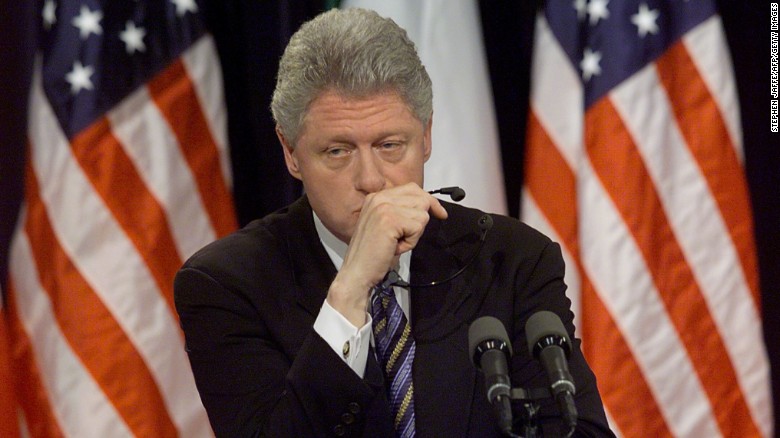
    Before Trump, the closest a sitting US President got to meeting a North Korean leader was Bill Clinton, who was considering the possibility of traveling to Pyongyang to conclude a missile deal late in his presidency in 2000.
    The opening emerged after then-Secretary of State Madeleine Albright visited North Korea and met its then leader Kim Jong Il.
    But Clinton, unwilling, unlike Trump, to immediately accept before understanding more about what the meeting could achieve, sent Albright on a reconnaissance mission.
    "President Clinton wisely said 'I am not going until this is prepared, I am sending the secretary ... That didn't thrill them,' " Albright said in Brussels on Friday.
    Ultimately, after Albright went to Pyongyang and as US diplomats worked to set up the presidential visit, it became clear that North Korea and the US were too far apart on the details of the missile pact to justify handing Kim the huge concession of a Clinton visit.
    "Really they were stuck on one issue. North Korea was willing to stop selling missiles and North Korea was even willing to stop making missiles. But North Korea was not willing to give up the missiles it had," said Jeffrey Lewis, a non-proliferation expert at the Middlebury Institute of International Studies at Monterey.
    "North Korea seemed to be holding back their last concession so that they could get the big visit and the Clinton administration knew that the visit was the big deliverable and they wanted to spend it very carefully," he said.

    George W. Bush

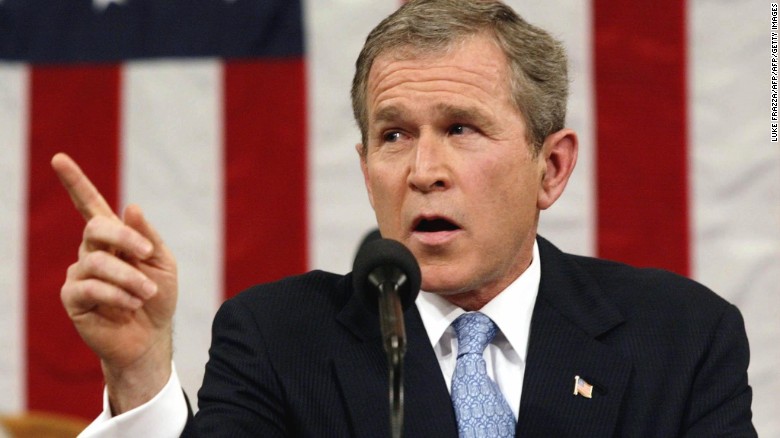
    The subsequent Bush administration, including hawks like Defense Secretary Donald Rumsfeld and Vice President Dick Cheney scotched efforts by Colin Powell's State Department to follow up the Clinton diplomacy.
    Then the discovery of a North Korean highly enriched uranium program, that flouted the spirit of an earlier Clinton administration deal to halt North Korea's plutonium program sent relations back into the deep freeze.
    Later on, when Bush did engage North Korea it was in the framework of the six party talks, including the two Koreas, Japan, the US, Russia and China that was designed specifically to ensure that Pyongyang could not use provocations to secure their goal of direct talks with the US.

    Barack Obama

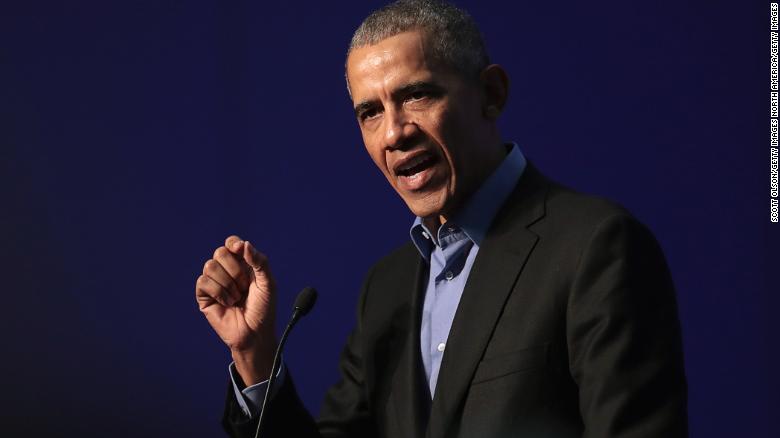
    The next President, Barack Obama, came to power vowing to talk directly to America's enemies. Eventually he traveled to meet Cuba's President Raul Castro and spoke to Iranian President Hassan Rouhani by phone.
    But he concluded it would be wrong to cave to North Korea's provocations.
    "This is the same kind of pattern that we saw his father engage in and his grandfather before that," said Obama in 2013. "Since I came into office, the one thing I was clear about was, we're not going to reward this kind of provocative behavior. You don't get to bang your spoon on the table and somehow you get your way."
    During the Obama administration however there was a sign of just how keen the North Koreans still were to attract prominent US visitors.
    In 2009, Clinton finally made it to North Korea for a visit on a mission to free two imprisoned US journalists used by Pyongyang as leverage to lure a significant American to the country.
    His poker face in photos alongside Kim Jong Il was seen as a clear attempt to limit the propaganda value of his visit.
    Another ex-president, Jimmy Carter, visited in 2010 and returned with another jailed American.

    Donald Trump


    Not for the first time, Trump has decided to take exactly the opposite tack to Clinton and Obama -- and by accepting the invitation he will head onto treacherous diplomatic ground if the visit does come off.
    The question now before Trump's boldness be rewarded?
    Or will he give away what is one of Washington's best bargaining chips and return home from his talks with Kim with something less significant than a North Korean undertaking to satisfy America's goal -- the verifiable dismantling of its nuclear weapons and intercontinental ballistic missile programs.
    His shock move is consistent with his vow to be a disruptive global force and he is showing characteristic bullish confidence that only he can unpick one of the world's most intractable conflicts.
    An optimistic view would be that Trump's fresh thinking and willingness to give Pyongyang what it wants so quickly is exactly the kind of unorthodox approach that can shake North Korea diplomacy out of its long torpor.
    Posted in

    Fayose’s aide says entry of Osinbajo’s aide Ojudu into Ekiti guber race is a scam

    Edit Posted by with No comments
    Special Adviser (Political) in the office of Vice President Yemi Osinbajo, Senator Babafemi Ojudu, has been described as “a scammer” who wants to use his declaration to contest for Ekiti State governorship election to raise funds for himself.
    Special Assistant to the Ekiti State Governor on Public Communications and New Media, Lere Olayinka, who made this allegation, added that Ojudu is aware “he won’t even come near the All Progressives Congress (APC) ticket,” but wants to use the July 14, 2018 governorship election to raise funds from unsuspecting members of the public.
    Olayinka was reacting to statement made by Ojudu at his governorship declaration in Ado Ekiti on Friday.
    Ojudu had, while officially declaring his governorship ambition boasted that he would probe the government of Ayo Fayose, if he is elected governor of the Ekiti State.
    But reacting, Olayinka argued, “Even though Governor Fayose is not afraid of being probed by anyone, it is laughable that someone like Ojudu, who did nothing for Ekiti State as Senator for four years and was not bold enough to seek reelection because of fear of losing scandalously is the one talking about probing the governor.”
    He then challenged Ojudu to tell Ekiti people one benefit that was derived from his four years as a senator.
    Olayinka who listed some of Fayose’s achievements in infrastructure and others said, “It is on record that Senator Ojudu was the only one who did not seek reelection in 2015 out of the three APC senators in the State then and it was because he was not even sure of getting votes in his family compound in Ado Ekiti that chickened out.”
    The Governor’s Spokesperson said Senator Ojudu should be ashamed of the number of people that attended his declaration, adding that; “Branded materials, banners and posters were even more than the people who were at the declaration and his (Ojudu) disappointment was so glaring while delivering his prepared speech.”
    Olayinka, who advised Senator Ojudu to face the uphill task of securing the APC ticket before threatening to probe anyone, added that; “Even with his sparsely attended declaration of today, it should be clear to discerning minds that Senator Ojudu is only in the governorship race to enrich himself.”

    Manchester United won Liverpool { 2-1}

    Edit Posted by with No comments
    Marcus Rashford scored twice as Manchester United held on to beat Liverpool and strengthen their grip on second place in the Premier League.
    The win meant Jose Mourinho's side narrowed the gap on runaway leaders Manchester City to 13 points - at least until City play at Stoke on Monday - but, more pertinently, they are now five points clear of the third-placed Merseysiders.
    Rashford, making his first league start since 26 December, will rightly grab the headlines but Romelu Lukaku was instrumental in both goals, and Liverpool simply could not deal with his physical power in the first half.
    First, the Belgium striker's header from David de Gea's clearance found Rashford charging into the visitors' box, and he cut inside Trent Alexander-Arnold before firing into the bottom corner.
    For United's second goal, Lukaku held up the ball from another goal-kick before feeding Juan Mata and, although he could not get a shot away, the ball fell for Rashford to score via a slight deflection from Alexander-Arnold.
    At that stage Liverpool were second best in every area of the pitch and could have fallen further behind when Mata volleyed acrobatically wide from an Alexis Sanchez cross.
    Jurgen Klopp's side improved dramatically after the break and, with United defending deep, the visitors cranked up the pressure without ever really opening up their hosts.
    It took an own goal for the Reds to reduce the deficit when Eric Bailly turned Sadio Mane's cross past De Gea while attempting to clear at the near post.
    That gave Liverpool's travelling fans hope but their side could not fashion any further clear chances, even in six often chaotic minutes of stoppage time.
    United survived to clinch victory in the first of three games here in the next seven days that will shape their season.
    Next up are Sevilla on Tuesday, with a place in the last eight of the Champions League at stake, before they face Brighton in the FA Cup quarter-finals next Saturday

    Rashford returns to run riot

    The arrival of Sanchez from Arsenal in January has had ramifications for several United players, including Rashford, who had played fewer than 100 minutes as a substitute in 2018 before Saturday.
    Rashford has had to wait for his chance but, in front of watching England manager Gareth Southgate, he did not waste it.
    With Paul Pogba injured, Sanchez moved inside to play in the hole behind Lukaku, with Rashford and Mata coming back into the team on the left and right.
    And while Sanchez again failed to impress, Rashford showed his lack of minutes has not affected his sharpness or his appetite in front of goal.
    The 20-year-old now has 12 goals in all competitions this season, making this his most prolific campaign yet.
    He had no opportunities to complete what would have been his first senior club hat-trick in the second half, but received a standing ovation when he was replaced by Marouane Fellaini after 77 minutes.
    "His performance will give him a lot of confidence - his first goal was absolutely brilliant," said former England winger Chris Waddle, who was at Old Trafford for BBC Radio 5 live.
    "He also did a great job defensively, helping out his left-back Ashley Young in the second half, and he will be disappointed to go off when he did."

    A reality check for Liverpool's defence

    Jurgen Klopp's side had conceded only one goal in their previous five games but any suggestions that their problems at the back might be over quickly disappeared in a fractious first half.
    Lukaku bullied the Reds centre-halves Dejan Lovren and Virgil van Dijk throughout the first period and the carnage that the big Belgian caused allowed his team-mates to capitalise.
    True, Liverpool were disjointed all over the pitch before the break, but they were especially disappointing at the back, which is where the damage was done.
    The Reds did improve in the second half when they at last managed some meaningful possession, but they struggled to break down a well-drilled United back-line.
    Bailly's own goal means Liverpool are now the highest-scoring away side in Europe's big five leagues, with 35 on their travels, but this was not one of their attack's better days.
    With space at a premium for Mane and Mohamed Salah, their forays forward lacked their usually lethal punch and, other than pick the ball out of the back of his net, De Gea had little else to do.
    Klopp felt his side should have had a penalty when substitute Fellaini tackled Mane inside the area, but genuine scares for the hosts were few and far between.

    Man of the match - Romelu Lukaku (Manchester United)

    What they said:

    Manchester United boss Jose Mourinho, speaking to BBC Match of the Day: "We were quite aggressive in the first half, we wanted to have control of the game, spaces for transition and to try to exploit - not weaknesses - but points where the opponent is not so good.
    "The second half it was not our intention to be as defensive as we were. Liverpool pushed us back but I don't remember the chances that needed David de Gea to make the goal safe. I don't remember a dangerous situation to our goal. It was control by them having the ball and control by us without the ball. I think we deserved the three points."
    Was this good preparation for the Champions League?
    "The three games in the league, the Champions League and the FA Cup are independent events, with no relation to the next match. The human brain is a complex thing. The defeat leaves a bit of damage and victory makes happiness even if you are fatigued. The best thing was to win this match."
    Liverpool boss Jurgen Klopp, speaking to BBC Match of the Day: "It was 2-0 down of course - not a good idea against Manchester United. Lukaku is one of the best strikers in the world, we needed to be around to pick up the ball, we were not and Rashford could use the situation twice.
    "We had opportunities to shoot from distance but we were not good enough, we did not score and had to chase the game in the second half. We did that, scored one and I think everyone agrees it was a penalty [Fellaini's tackle on Mane] but that doesn't help us now.
    "It is very important [we bounce back] we have no time to waste.
    "We chased the game in the second half and caused them problems, but this is a result game and they have the result and we don't."

    Two shots on target, two goals

    • Manchester United beat Liverpool for the 68th time in league competition; this is the most defeats Liverpool have suffered against a single side.
    • Manchester United have won four of their eight games against fellow 'big six' sides in the Premier League this season (W4 D1 L3), twice as many as they managed in the whole of last season (W2 D4 L4).
    • Liverpool have won only one of their seven Premier League games on the weekends immediately after a Champions League game this season 
    • Manchester United have won 20 of their 30 Premier League games this season, already surpassing their totals in both 2016-17 (18) and 2015-16 (19) and equalling their number of league wins in 2014-15 (20).
    • Only Manchester United (67) have profited from more own goals in the Premier League than Liverpool (58).
    • Manchester United had just two shots on target in this match - both of which were scored by Marcus Rashford.
    • Rashford has scored with 29% of his shots in the Premier League against 'big six' clubs, compared to 10% against the other teams.
    • Rashford has scored seven of his 16 Premier League goals against teams in the 'big six' (44%).
    • Romelu Lukaku now has seven Premier League assists this season; more than in any previous campaign.
    What next?
    Manchester United look to join Liverpool and neighbours Manchester City in the last eight of the Champions League when they play the second leg of their last-16 tie with Sevilla on Wednesday (kick-off 19:45 GMT), after a 0-0 draw in Spain.
    Mourinho's men return to domestic action on Saturday when they host Brighton in the FA Cup quarter-finals (19:45 GMT) and their next Premier League game is after the international break, when they play Swansea on Saturday, 31 March (15:00 GMT) in what will be their fourth successive game at Old Trafford.
    Liverpool are out of the FA Cup but they are in league action next weekend, when they play Watford at Anfield on Saturday (17:30 GMT).